The day after our big Mount Barker railway adventure, we swapped trains for timber cottages and headed to Hahndorf, Australia’s oldest surviving German village tucked into the Adelaide Hills. It felt like stepping into a European postcard that someone had quietly dropped into South Australia.
Cobblestone-style paths, old stone buildings and painted wooden signs lined the main street. Even before we ducked into any shops, the whole place had that cosy, storybook feel that makes you instinctively slow down and just wander.
The German Arms Hotel: Bows, Bratwurst And Busy Tables. Huge red bows were wrapped around the balcony, garlands ran along the railings and the red umbrellas outside framed the old stone walls perfectly.
The street was busy but never frantic, just that gentle holiday buzz of families, couples and friends drifting from shop to shop. It’s the sort of place you could easily lose a whole afternoon.
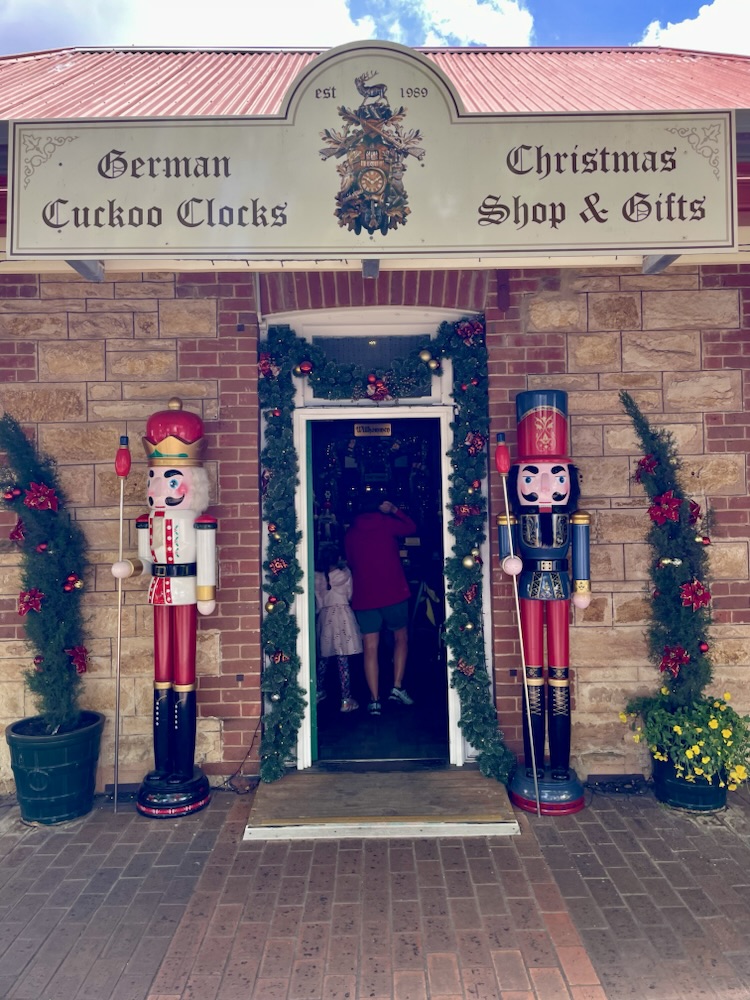
From there we wandered down to what instantly became Georgia’s favourite part of the day: the German Cuckoo Clocks and Christmas Shop.
Two giant nutcrackers stand guard at the doorway, which was enough to hook the girls before we had even stepped inside. The entrance was framed with greenery and baubles, and as soon as we crossed the threshold it felt like walking into Christmas itself.
Shelves were packed with cuckoo clocks, ornaments and decorations, all glowing in soft light. The girls tried to take everything in at once, pointing at tiny wooden figures and sparkly baubles, while Ali took a much slower, more deliberate lap, mentally redecorating our future Christmas tree as she went.
It was one of those shops you do not rush. Even if you walk out without buying a thing, you come away with that childlike “Christmas is coming” feeling lodged firmly back in your chest.
Further along the street we found Old Hahndorf Village, a cluster of stone buildings that feels frozen in time. The South Australian Opal & Mining Museum tucked inside was a fun little detour.
We browsed displays of fossils, opals and old mining tools, some of the stones on display had been buried long before dinosaurs disappeared. It was small, free to enter and a nice quiet pause from the main street.
Outside, the signs, the stonework and the old-fashioned styling all added to that “living museum” feeling Hahndorf does so well.
About the Author